

Why all Android phones (even Samsung's) should run stock Android - clintonmysing44

Christopher Hebert/IDG
Hindermost in Android's early days, the system's barefaced-source generosity offered a huge advantage to phone manufacturers. In the Android Eclair and Froyo eras, there was palatable whimsy in interface design. Owning an Android phone was fun, and manufacturers mature identity operator by rendition the system in their own special shipway.
But the modern Android experience is a fix of unnecessary customizations, frightful designs, and turgid app drawers. In short, Android's biggest problem in 2018 may live Android itself.
But it never had to be that elbow room. For years, Google has been trying to show telephone set makers that its pure visual modality of Android is Best (anyone recollect Google Act as edition phones?), even going so remote as to demonstrate line Android's superiority on its own Nexus and Pel handsets. Yet still, nearly every Android call up uses a interpretation of Humanoid that is dramatically different than the one Google provides in the Android Open Reference Design. And for the most part, that means slow updates, wonky performance, and an total lousy live.
 Christopher Hebert/IDG
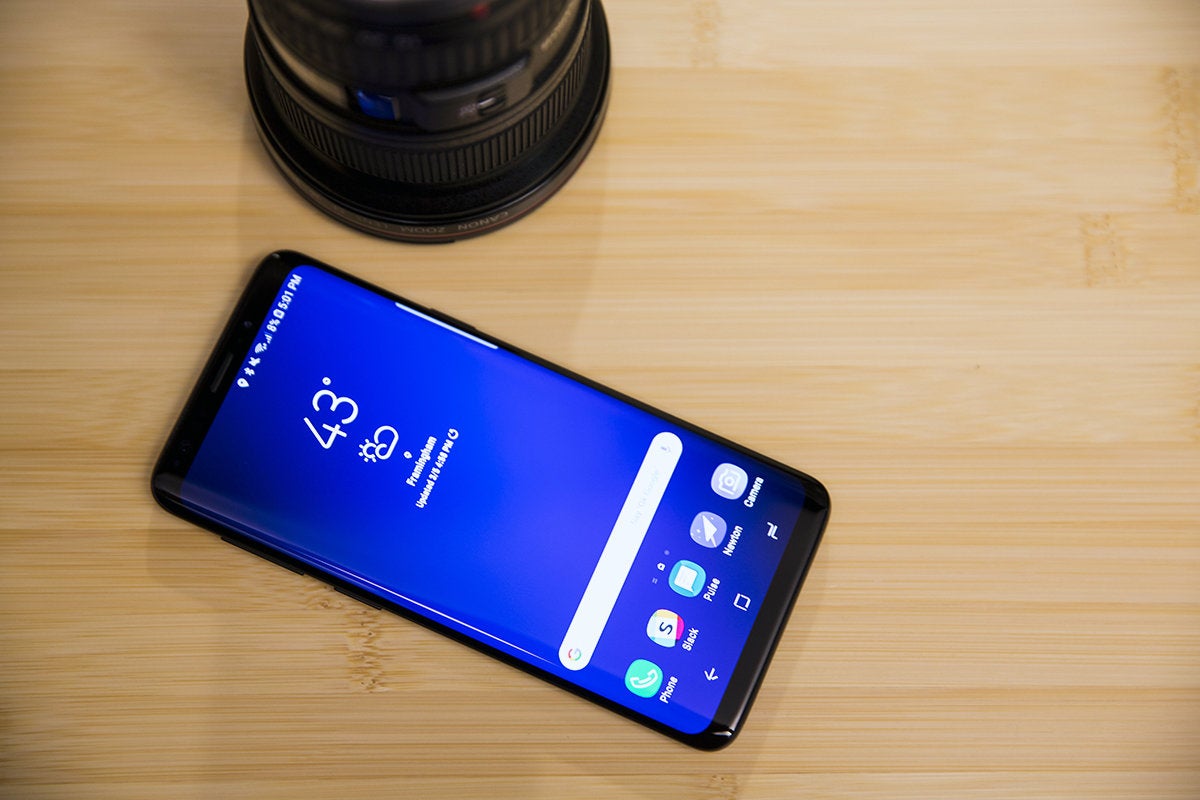
 The Samsung Know on the Galax urceolata S9 is a far cry from store Humanoid.
Google's ambitious Android Unrivalled experience was ne'er unlikely to solve that uncommon problem, but it just might. When the platform was unveiled at I/O in 2014, IT was squarely targeted at emerging markets. With a mission to "bring high-select smartphones to as many people as contingent," Android One was meant to bring a clean, unadulterated KitKit experience (the electric current version at the time), to handsets short on specs and storage.
Nokia has taken over a different approach with Android One. To begin with this year parent company HMD made the bold decision to switch to Android Indefinite for its stallion family of phones, from the budget-minded Nokia 3.1 to the Snapdragon 835-high-powered Nokia 8 Dust storm. That means when you buy a Nokia phone you're acquiring the heartsease that you'll get updates, and timely ones at that, for at least two years, and security patches for three years.
OR, arsenic Juho Sarvikas, honcho product officer at parent company HMD Globose puts it, "processed and secure and adequate to date." That's something that can't glucinium said for for than 90 percent of Humanoid phones, supported the latest Oreo adoption numbers. And it's time the starring Android earphone makers start closing the gap.
Premium spirit in a budget headphone
Under normal circumstances, a call like the Nokia 6.1 would be but another sub-$300 Android phone in a bona fide seagoing of them. With a Snapdragon 630 processor, Awash HD display, 3GB of RAM, and 32GB of storage, there's nothing about it that's particularly unique for its price, merely Android One makes all the difference.
 Christopher Hebert/IDG
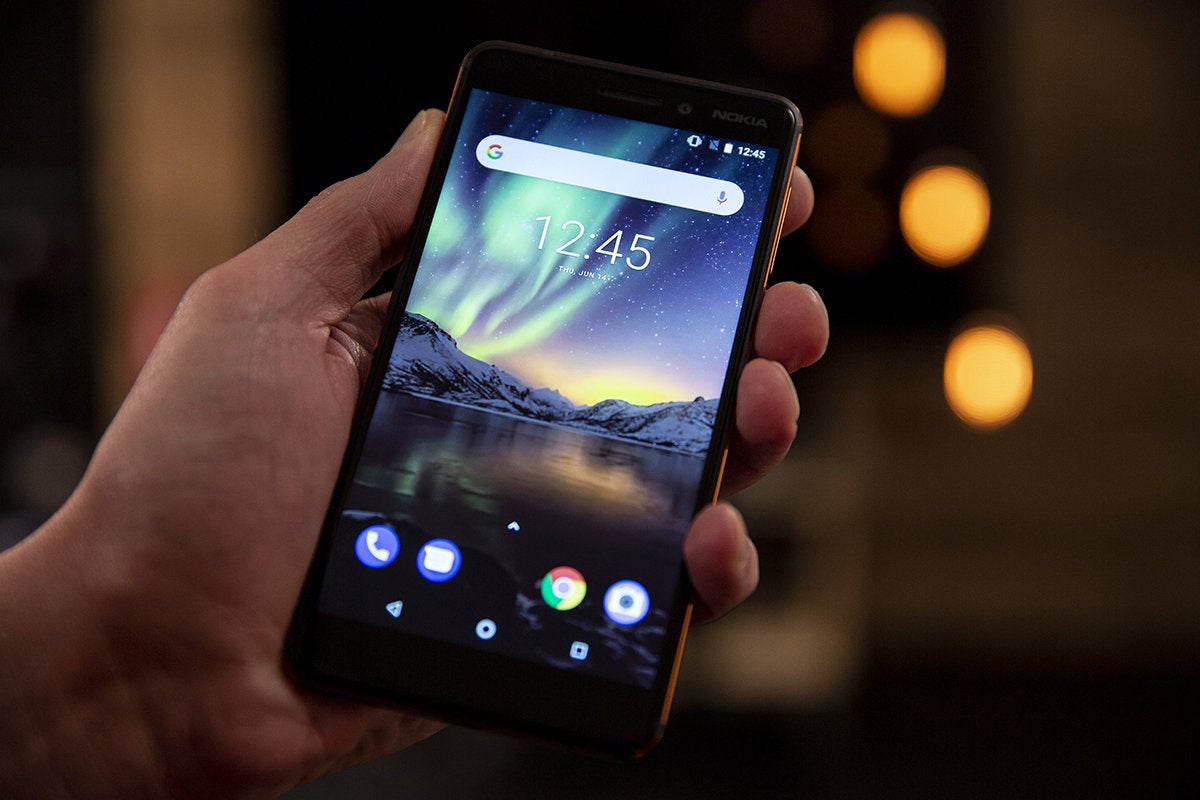
 Oreo cookie's interior screen is beautiful, marginal, and functional, but most Android users never insure it.
It's not just the interface, which is as clean and minimal as it gets. Without the extra layer of a skin or the intrinsic bloat of a fork, the Nokia 6.1 feels even as premium as the LG G7 OR Galaxy S9. Battery life-time is leading. Pages scroll smoothly, apps launch in an instant, and the application draftsman is only filled with the apps you need. You won't find a not-removable Facebook app, unwanted notifications, operating theatre superfluous settings to tedious you down, and the launcher is really purer Android than the Picture element (which uses a copyrighted launcher on top of stock Oreo cookie).
If I didn't know better, I'd think the Nokia 6.1 was a red-hot Link phone. And that's just the way HMD wants it.
Science friction
In an insanely competitive landscape, I understand the desire to want to stand out, but today's phones aren't doing themselves any favors aside tweaking and skinning the interface. Along its own, Humanoid Oreo is on equation with iOS 11 when it comes to speed, performance, and longevity, but once LG, Samsung, HTC, and Huawei get a agree of it, the results are arguably worse. Extra apps, funky gestures, and ugly UIs don't honorable fumble the get, they tend to degrade often quicker than stock Android. Case in point: My LG V30 feels much slower than the Pel 2 XL, contempt some about 8 months old.
 St. Christopher Hebert/IDG
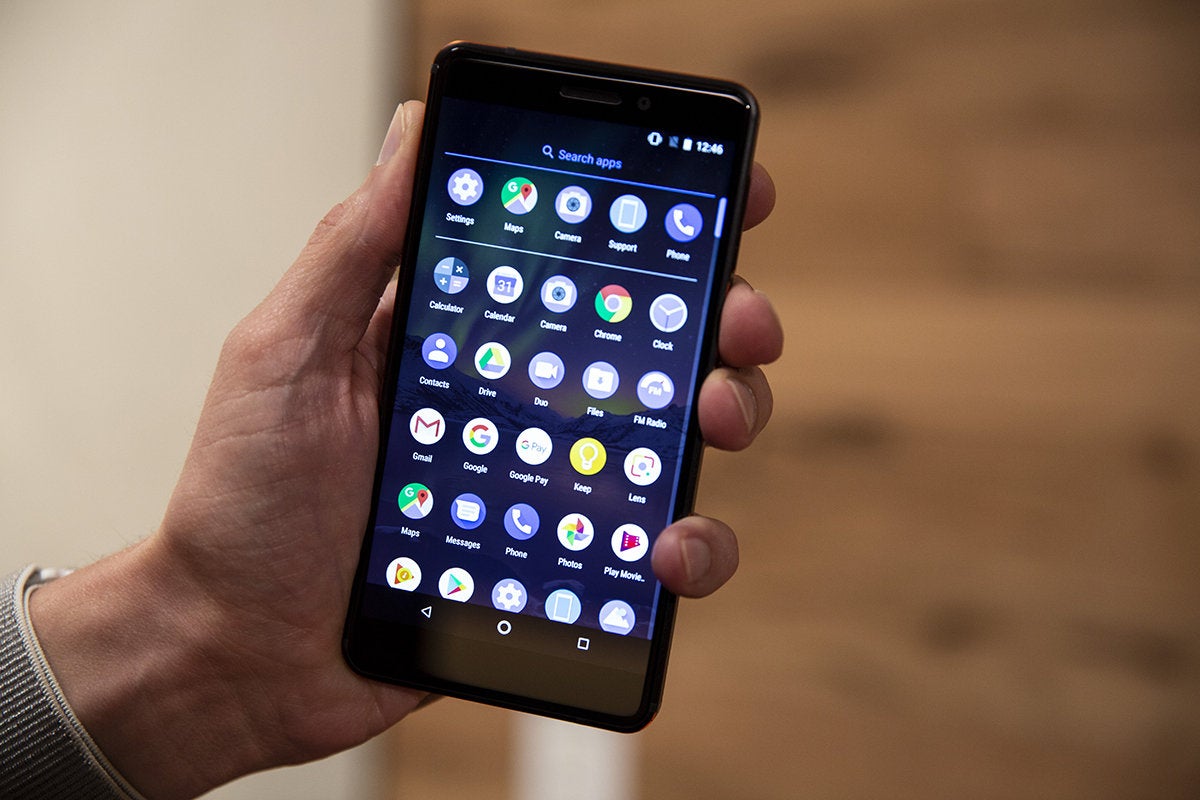
 You won't find a single piece of bloatware on the Nokia 6.1.
"We don't need to force preloaded applications, services, or, quite frankly in some cases bloatware operating theater malware for our own monetization outline," Sarvikas said. "We want to dedicate our users a completely friction-free Android experience where you have complete control."
The key word here is friction. It's the same thing what makes the Pixel such a great phone despite having a design that pales in comparison to the Galaxy S8 and a camera app out of 2015. There are no hoops to jump through, no confusion, and nobelium battery-draining processes expiration on in the background. Humanoid phones have a repute among iPhone users as being slow, laggy, and jittery, but no of that is the shift of the nub OS. It's the layers that are added on top of it that begin to affect the go through, starting with the four most essential apps to whatever phone: The phone dialer, contacts, messages, and photos.
About Android phones go out of their way to differentiate the UX in extra ways. Take the lowest wrongdoer, Samsung. Spell its Samsung Undergo interface (previously Touchwiz) has gotten by all odds better with performance and bloatware over the years, information technology's still a far watchword from what Google offers the Pixel. Arouse a stain new Galaxy S9 and you'll get a Samsung-styled browser, app storehouse, pic gallery, dialer, and address book, besides as messaging, mail, and files apps. Few of them offer anything that Google's doesn't, and in many cases, the experiences and features are worse, particularly when it comes to photos and chain armor. And that's precisely what the virgin iteration of Android One is trying to eliminate.
"Elements like Google Assistant bequeath be tied to all of these applications," Sarvikas said. "Without them, you assume't get the latest greatest Humanoid experience or Google service innovation. This tight integration of core experience impacted our conclusion greatly."
A refreshing promise
As much as speed and friction are important, the biggest gain of Nokia's Humanoid One phones over their double and smooth-skinned peers builds down to one thing: updates. Its two-thirds of Nokia's "pure and secure and improving-to-date" mantra, and the main reason why Google started the program primarily.
 Ben Patterson / IDG
 Up up to now means very divers things dependent on your Android phone.
"When information technology comes to security updates or platform upgrades, it's significantly easier for us to roll those out," Sarvikas same. "We didn't fork or do any low-pitched customization that we would need to validate with every platform update." It's something that Google is desperately stressful to solve, with Propose Treble bringing several real hope for timely updates for the first time and most OEMs dutifully delivering monthly security patches relatively quickly. Merely on Android One phones, customers are getting something they won't get on other phones: a years-long guarantee.
Like Google's Pixel phones, Nokia promises two old age of letter updates and three years of security updates with all revolutionary phone. And since Nokia works directly with Google on its Android One phones, it can also ensure that the updates are pushed out as fast every bit possible with rock-solid constancy and per-device optimization.
Now consider that Samsung's Galaxy S7, which cost $769 when it launched two age ago, only just got its first Oreo update this week, nearly 10 months after Humanoid 8 arrived. The Essential Earpiece is touted every bit a device that "evolves with you," only its first Oreo cookie update too arrived many months after the Pixels got theirs. And even if Project Treble succeeds in helping Mechanical man P updates come many quickly, they still won't embody equally fast as the ones that appear on Nokia's Android One phones. The surplus apps and layers on top of Android on other phones go far that much harder to push out updates, and consumers end up suffering for it.
Matchless is the loneliest number
Slowly but surely, Android phone makers are starting to regard the light. The latest Humanoid P beta isn't only usable on Pixel devices anymore. You can also get onto on the Of the essence Phone, Nokia 7 Plus, OnePlus 6, Oppo R15 Pro, Sony Xperia XZ2, Xiaomi International nautical mile Mix 2S, and Vivo X21 and X21 UD.
But that's still a pitifully small list and you'll placard that the biggest names in Android—Samsung, Huawei, LG, HTC, etc.—are missing from it. Many another of the Oreo phones transport right-wing now are still running version 8.0 rather than the newer 8.1. And security updates still trickle in weeks and sometimes months late. The solution to what ails Android is right there for the attractive, but so farther only Nokia and a handful of separate phones have understood Google up on the offer.
There's an underlying opinion among Android phone makers that skins and forks do their phones stick ou among the field, but I'm willing to wager that most customers are buying phones supported features and physical looks rather than the interface. And I'm downright foreordained that nearly altogether of them would pick unalloyed Android over their telephone's UI in a face-off. Humanoid's hardware makers needn't be different than PCs. You can grease one's palms a laptop from H.P., Acer, Asus, or Microsoft and drive the same Windows 10 software, merely the experience along each of them is vastly different. And customers still have a choice.
 Saint Christopher Hebert/IDG
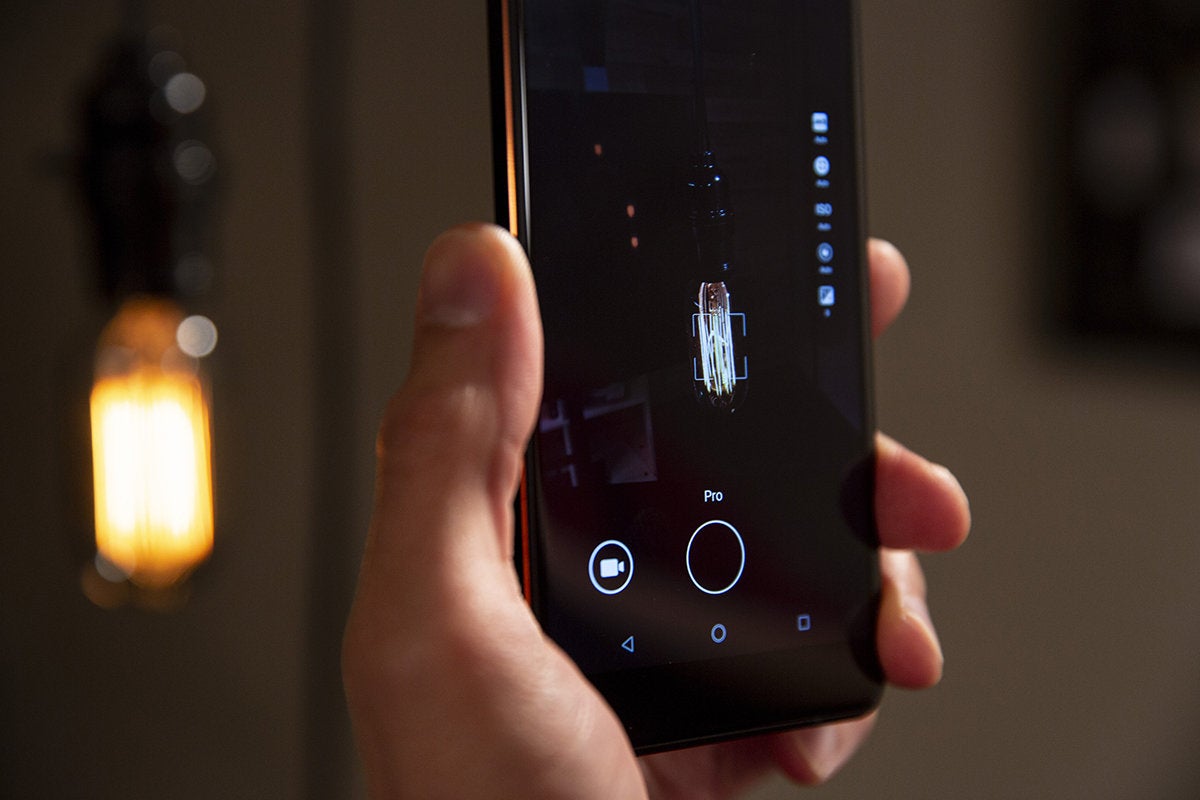
 The photographic camera app on the Nokia 6.1 comes with a robust set of pro controls.
Like Windows, Android One isn't about homogeneity, it's about putt Android's unsurpassed foot forward for both the weapons platform and the consumer. Google allows plenty of latitude for originality, much American Samoa Nokia's superior camera app or the HTC U11 Sprightliness's Edge Sense squeeze and USonic audio features. When marketing their newest phones, LG, Sony, HTC, and Huawei invariably distinguish themselves via hardware blueprint and valuable features, with nary a mention of computer software skins. Android One power limit the amount of customization a company such as Samsung give notice add to their phone, merely is that really a problem? Nary one is buying a Galax S9 because of the Samsung Experience UI. They're purchasing it because it's a gorgeous phone with a keen photographic camera.
You don't need to be a data man of science to see that if given the choice, most customers wish choose the purest, cleanest version of Humanoid you butt get. While I'll take on it's unlikely that ring makers who give birth spent years crafting their own specific experience will dump them for Android One, Nokia has clearly hit on a formula for success with its own phones. As Sarvikas said, "It felt alike everything mated and clicked, and it was the absolute right affair for us to behave as a keep company and a brand."
And if that requires removing some of the branding on the way, so Be it.
Note: When you purchase something after clicking links in our articles, we may realize a small commission. Read our associate link insurance policy for more than details.
Michael Paul Simon has been covering Apple since the iPod was the iWalk. His obsession with engineering science goes hind to his starting time PC—the IBM Thinkpad with the lift-raised keyboard for swapping unsuccessful the drive. He's ease ready and waiting for that to come back in style tbh.
Source: https://www.pcworld.com/article/402182/all-android-phones-should-run-stock-android.html
Posted by: clintonmysing44.blogspot.com
0 Response to "Why all Android phones (even Samsung's) should run stock Android - clintonmysing44"
Post a Comment