

Hands-on: Asus NovaGo’s Snapdragon-based Windows PC feels predictably ‘good enough’ - clintonmysing44

Tick Hachman / IDG
The Asus NovaGo is a Windows laptop with something completely new: the Snapdragon 835 Rotatable PC Platform, Qualcomm's bid to usance its smartphone microchip to catch some Windows PC share in a category longish dominated by Intel.
Spending a little time with the car on Tuesday was an exercise in examination—and managing—expectations. Qualcomm executives have admitted that the Snapdragon platform will represent a bit slower to launch apps, a bit slower to boot, a trifle slower here and there. Our early impressions show the kind of performance that Qualcomm hopes bequeath follow "good adequate" for mainstream users with modest demands.
On the outside, the Asus NovaGo looks equivalent any new ultrabook. It measures 12.4 x 8.7 x 0.59 inches and weighs just finished 3 pounds. The NovaGo feels sturdy in the hand, perhaps a bit heavier than other ultrabooks we've reliable. The 13-inch screen has a midrange, 1920×1080 resolution that's conducive to Qualcomm's promise of long battery life from Snapdragon-based PCs. Memory amounted to 6GB.
 Mark Hachman / IDG
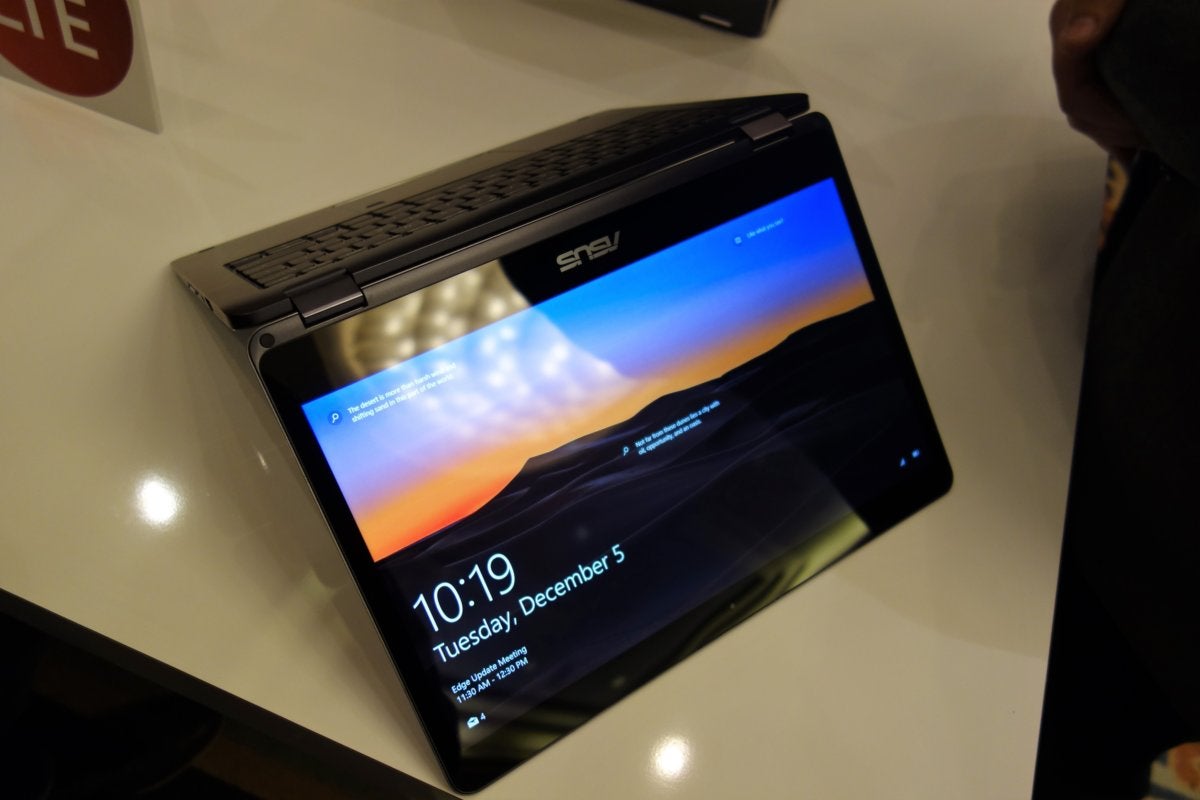
 The Asus NovaGo is a convertible pill, meaning it can flip over into presentment musical mode.
Quick specs:
- Reveal: 13.3-column inch, 1920×1080 LED-lit panel
- Central processing unit: Qualcomm Snapdragon 835 Mobile PC Platform
- Memory: Up to 8GB
- Storage: Up to 256GB UFS 2.0
- Connectivity: Qualcomm X16 modem (4×4 MIMO); 802.11ac (2×2 MIMO)
- Input: Stylus, deuce USB 3.1 Type-A ports
- Oculus sinister: Windows 10 S
- Dimensions: 12.4 x 8.7 x 0.59 inches, 3.06 pounds
- Price: $599 for 4GB Chock up/64GB storage; $799 for 8GB Wa/256GB of computer memory
- Transport date: Undisclosed
Roughly external features hint that this International Relations and Security Network't just an ordinary PC, however. For one thing, the demo units weren't obstructed in. Qualcomm and the device makers believe the Snapdragon PC platform can deliver 22 hours just about of active practice on barrage fire, or about two days when standby prison term is motley in. The estimate is that you'll leave your charger at domicile, and those chargers—standard barrel types, not USB-C—never made an appearance at our event.
 Mark Hachman / IDG
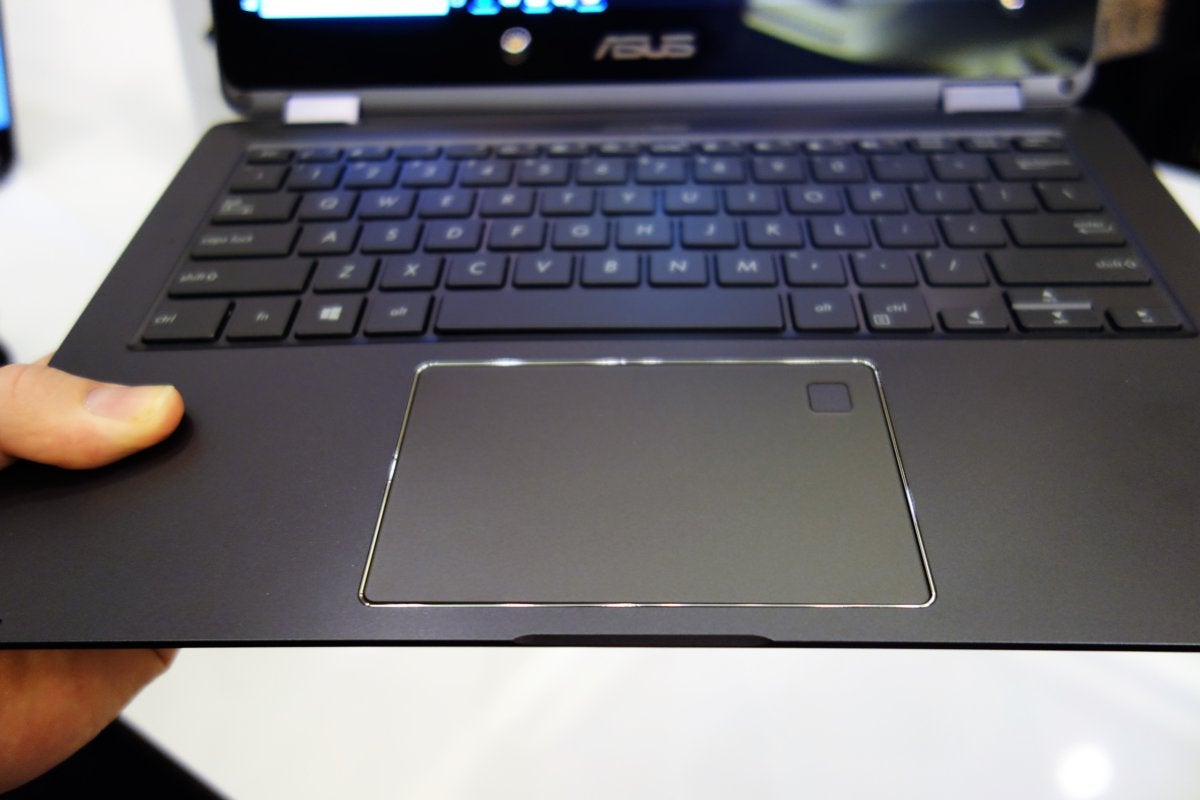
 A fingerprint reader hides within the Asus NovaGo's touchpad.
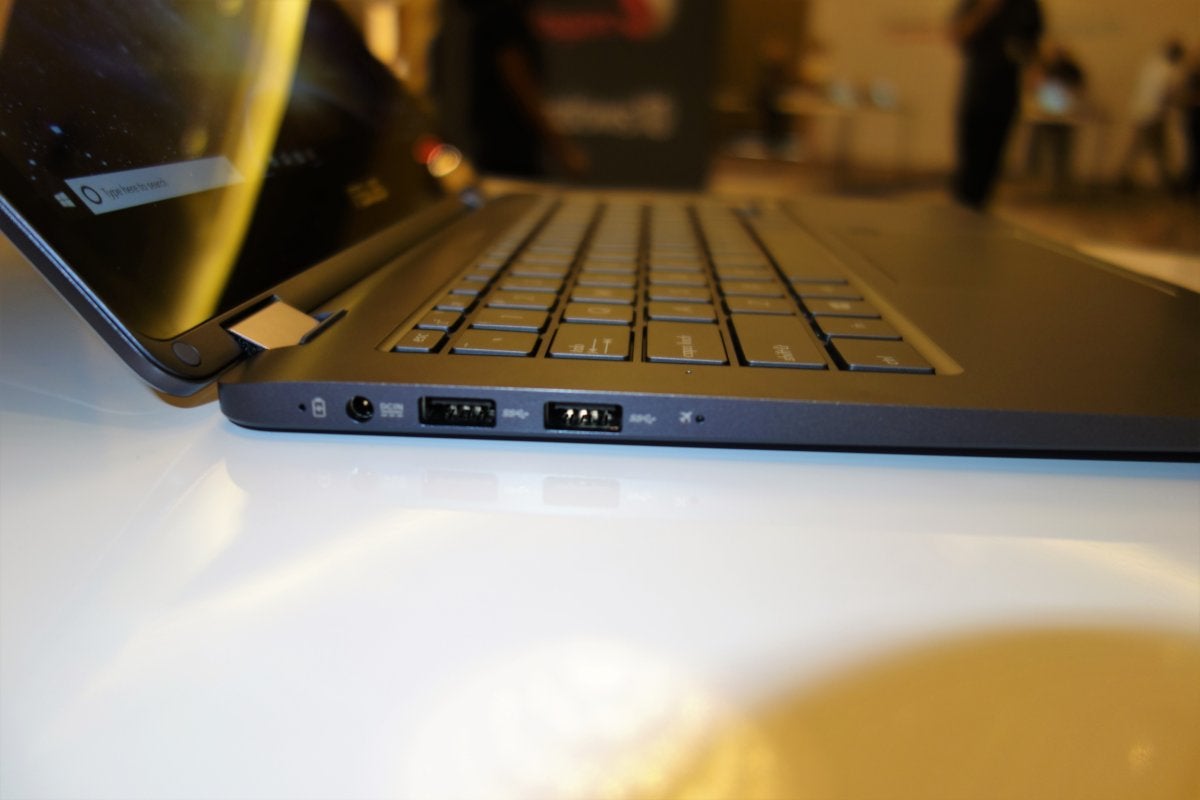
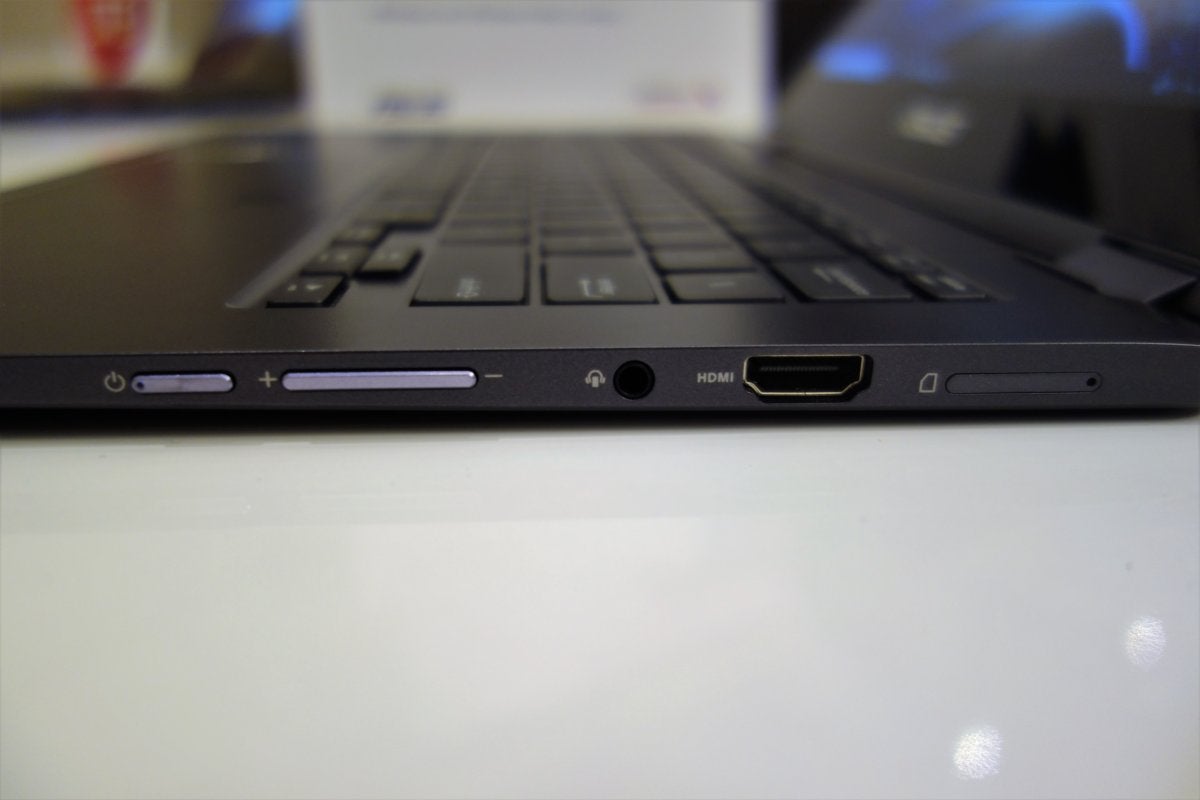
Speaking of USB-C, it's nowhere to beryllium seen on the NovaGo. There's a pair of USB-A ports on the left-manus side. On the right, there's the power push, headphone jack, an HDMI port, and theother hint that this is something special: a SIM slot. SIM slots are more usually base happening stage business-sort devices. Its presence on the NovaGo suggests this sport will represent trickling down to consumer devices.
 Mark Hachman / IDG
 Asus chose not to go with USB-C, choosing USB-A or else.
Interestingly, the NovaGo and the other Snapdragon-founded device we saw, the HP Enviousness x2, both run the Insider (beta) variation of Windows 10. We'atomic number 75 told this makes them quickly patchable. As it happens, the existing Windows 10 Fall Creators Update supports the new Snapdragon processors.
Performance: Your mileage may variegate
With a Snapdragon smartphone Saratoga chip controlling a experienced PC, it's natural to wonder about performance. In our experience, some of the basal tasks you'd need a Personal computer to do worked great, while others didn't. Web browse flew, at least on Inch. When we tried the PowerPoint desktop app, the NovaGo slowed down and then actually crashed. IT took more than a minute to restart, but the six slides in a short presentation loaded over a quick few seconds.
Windows took just a couple of seconds to restart subsequently the notebook was shut. A cold boot, though, took an smooth 30 seconds to reach the login screen. That's non horrendous—we've all sat through and through kicking cycles that lasted long enough to fetch a cup of coffee—and, American Samoa Qualcomm execs pointed out, an always-on PC doesn't need to reboot often.
Other computer software tests continued to vary. I proved upgrading one of the NovaGos at the Qualcomm demo table to Windows 10 Pro, which worked fine. I installed Google Chrome, and dependable loading the same site on both Chrome and Edge. PCWorld.com loaded markedly faster along Edge. I well-tried again on CNET.com, timing the load times. Edge required 8.5 seconds before I could interact (scroll) with the page; Chrome required 14.7 seconds.
I well-tried loading two common benchmarks, Maxon's Cinebench and Geekbench 4.0. Cinebench failed to set u for some reason. Geekbench reported a idiosyncratic-core score of 857, and a multi-core score of 3,117. Microsoft executives said that once a binary is interpreted and cached, it's stored to help improve next carrying out. Unfortunately, I was stopped from repeating the benchmarks and could not confirm that.
 Mark Hachman / IDG
 A SIM card slot hides on right manus side of the Asus NovaGo.
The real benefits of the Asus NovaGo and its Snapdragon platform remain to embody seen. Delays loading an app are far different from delays in actually victimisation it. While I solidly support the fundamental principles behind Qualcomm's strategy—more battery life, delight!—we'll deman to modesty further judgment until we can screen a system completely.
Note: When you purchase something after clicking links in our articles, we may earn a small delegation. Read our affiliate link policy for more details.
As PCWorld's senior editor program, Mark focuses connected Microsoft news and chip technology, among other beatniks. He has formerly written for PCMag, BYTE, Slashdot, eWEEK, and ReadWrite.

Source: https://www.pcworld.com/article/407682/hands-on-asus-novago-snapdragon-based-windows-pc.html
Posted by: clintonmysing44.blogspot.com
0 Response to "Hands-on: Asus NovaGo’s Snapdragon-based Windows PC feels predictably ‘good enough’ - clintonmysing44"
Post a Comment